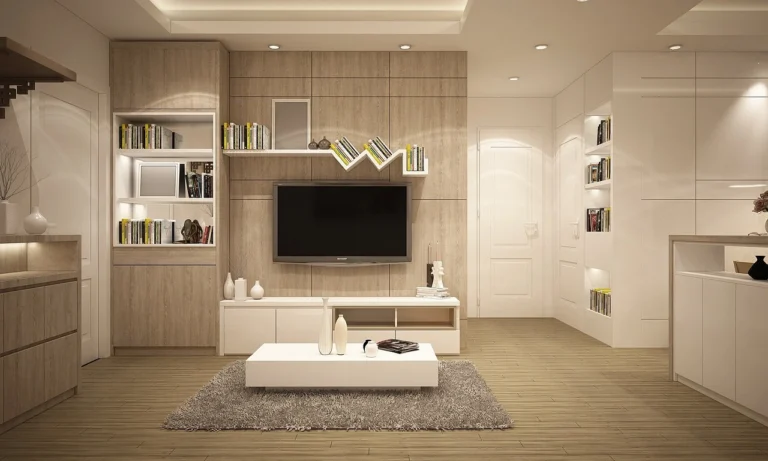

In 2025, our homes are no longer just spaces we live in—they’re evolving into intelligent partners that understand our routines, anticipate our needs, and simplify our busiest days. From AI-powered cleaning robots that map every corner of your home to smart assistants that adjust lighting, temperature, and security with a single command, home technology has entered its most transformative era yet.
As someone who has researched and tested emerging smart-home systems throughout the past year, I’ve seen firsthand how Artificial Intelligence is reshaping everyday living. Homeowners who once relied on simple voice commands now enjoy predictive automation, self-cleaning environments, and energy-saving systems that think for themselves. And the most exciting part? This is only the beginning.
If you are already an owner of an Amazon Echo or Google Home or are just planning to get rid of your old home and move into a new one with smart devices, this guide is here to lead you through the progress and great inventions that will have the biggest impact in 2025. Let us see what new technologies are being introduced, which ones are real and which ones are not, and what you should consider adding to your home right now.
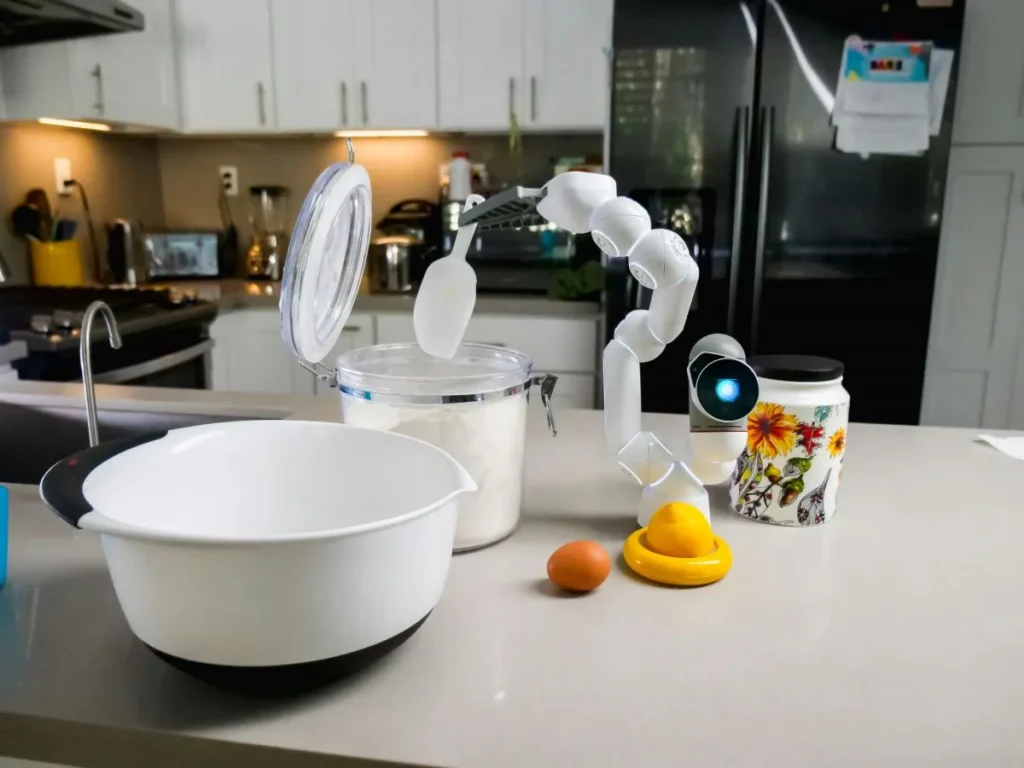
Jump to point
I. Introduction to Home Tech Evolution
A. Historical Context
Cleaning tools have come a long way from the days of scrubbing floors on one’s knees. Early household appliances-such as vacuum cleaners and washing machines-signified an impact on the discredited classification of chores. These appliances overtook the traditional methods of cleaning, bringing in time savings and higher standards of cleanliness to the home. With technological advancement, we built simple, then mechanical, versions of basic automation, and now our vast array, called AI systems.
B. Advances in Home Automation
In the present-day home, the existence of so many Artificial Intelligence-powered devices is taken for granted. From voice-enabled speakers to intelligent thermostats, AI has entered our daily lives. Establishing a common smart home ecosystem is now a trend because users have become exposed and comfortable with using digital assistants to control lighting, security, and perform house task-oriented functions. Signals are there that more and more homes will join the fray; new products are continuously coming to the market, bringing greater ease and convenience.
C. Importance of AI in Home Cleaning
So why is this whole wave of AI so important for home cleaning? In a nutshell, artificial intelligence enables devices to learn from the surroundings they operate in and from the habits of their users, resulting in a cleaning process that is more personal to users. In doing this, it basically gives the opposite of the traditional sense; more than just the efficiency and effectiveness, it feels almost like an intimate user experience. AI is completely changing the way we think about cleaning, giving us the ability to outsource chores to enjoy a cleaner home with virtually no labor..
II. Artificial Intelligence in Home Cleaning Devices
A. Smart Vacuum Cleaners
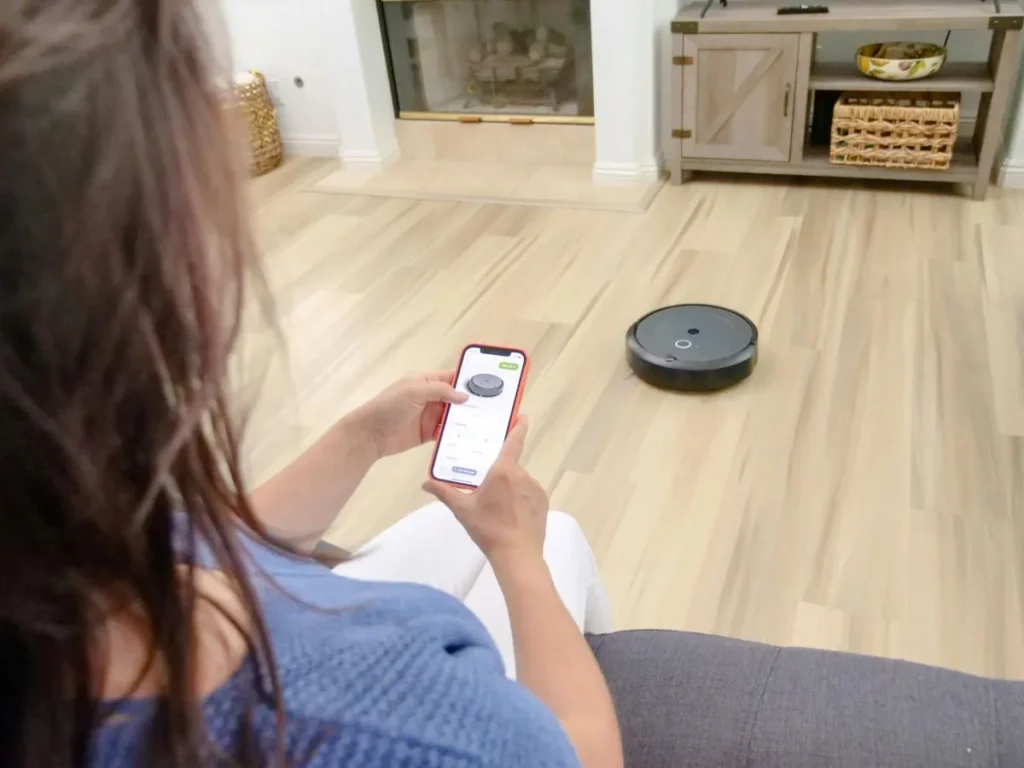
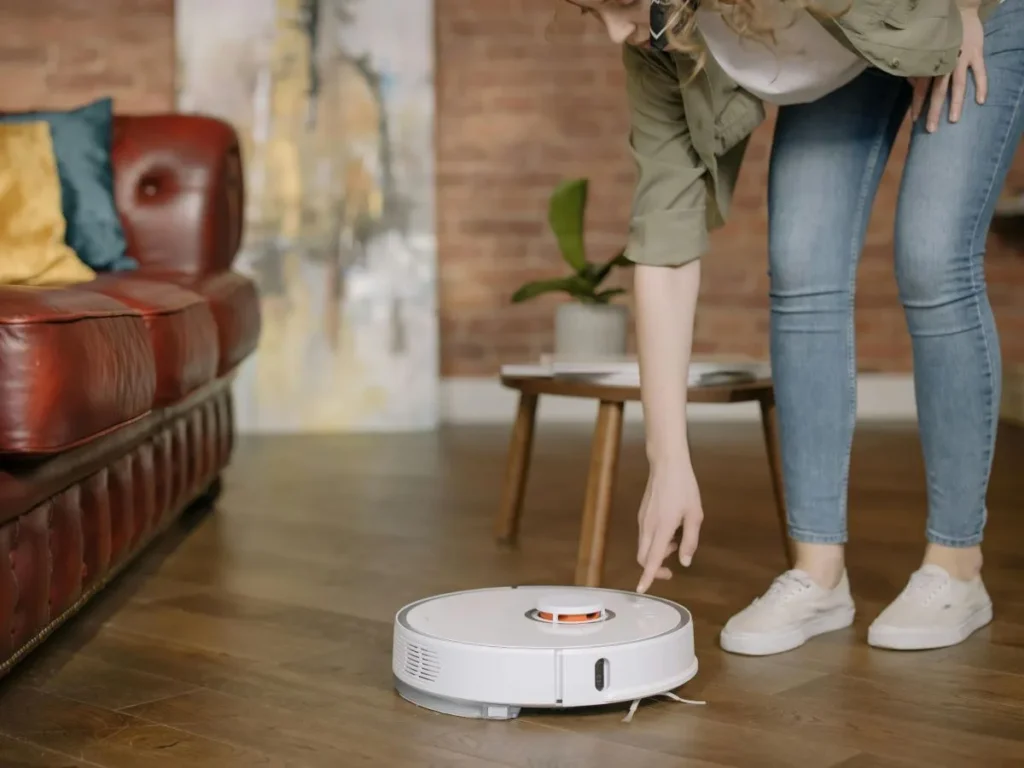
In the scope of cleaning, the advent of advanced robotic vacuum cleaners means a huge change. The vacuum robots with mapping technology can meander through your home, locating the best cleaning routes for cleaning effectiveness. Convenience is not just about that; they are often controllable through mobile applications, granting end-users oversight over times of cleaning and settings on their cell phones.
B. AI in Washing Machines and Dishwashers
Artificial Intelligence is changing things in the world of washing machines and dishwashers. Sensor technology aims to empower these appliances to automatically adapt cycles for best results, depending on load size and dirt levels. This turns on for enormous power and water savings while prolonging the service life of these machines via predictive maintenance. Imagine getting notifications when your appliance is due for servicing or cleaning!
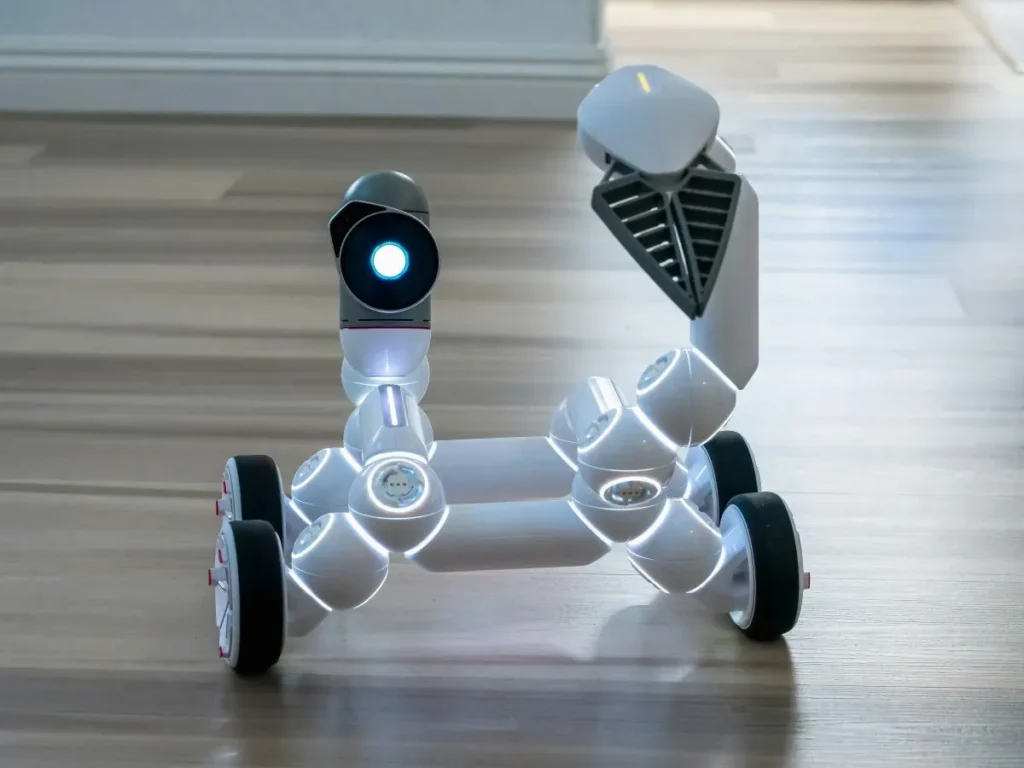
C. Indoor Air Purifiers and Maintenance
Artificial Intelligence also tends to show itself capable of changing indoor air quality radically. Happy to discover how smart air purifiers monitor your home environment with an array of tech gadgets, setting to adjust to varying occasions and conditions due to a set of pollutants or allergens as soon as they are detected by built-in sensors. The user interfaces on these pieces sometimes incorporate a feedback mechanism indicating when a maintenance-due conclusion comes into being, for you to confirm that you live and breathe fresh air
III. Automation and Smart Home Integration
A. Home Automation Hubs
These home automation hubs help to centralize all of your devices into a single hub to make them easily manageable. Their job is to facilitate communication between all sorts of different gadgets and ensure that all of them work together in harmony. With these advanced user interfaces, the activity becomes really painfully easy, making home accessing less of a hassle with setting everything up properly.
B. Scheduling and Machine learning
It is, in fact, most useful when finally set up, and your smart devices learn your cleaning schedules. Many smart appliances now learn how to optimize cleaning times according to your individualized routines and preferences. Thus, the devices become intelligent, learning over time how to optimize your cleaning according to your way of life.
C. Integration with Other Smart Devices
That is where the magic happens, when all these devices function together. This is the point of joining smart cleaning products with systems such as thermostats, lights, and security setups. The seamless experience that these things can create makes it possible for your command and even changes in your environment to be implemented almost immediately. It is really cool when your lights dim automatically as your smart vacuum gets to work!
IV. Ethical Considerations and Challenges
A. Privacy Considerations
With great power comes great responsibility: data collection and user privacy. Those are two areas in which Artificial Intelligence devices stand to face great criticism from all fronts. Homeowners must ensure that manufacturers honor the sanctity of user data with policies of clear and transparent data handling.
B. Dependence on Technology
Automating certain things can give one great convenience; however, these conveniences may become the reason people start relying on technology for everything around the house. The traditional ways of cleaning will surely fade away, which will somewhat in turn, dictate a change in the way we view maintaining a home. A balance between technology and work by humans would ensure that these skills remain treasured.
C. Environmental Effects
Another important factor would be the environmental effects of Artificial Intelligence cleaning gadgets. Energy consumption might be pivotal, with the various complexities associated with disposing of the old tech responsibly. Consumer-wise, pushing for sustainable green products to clean their homes should have been the name of the game.
V. The Future of Home Cleaning and Automation
A. Emerging Trends
While the future predicts enchanted ventures for the Artificial Intelligence cleaning technologies, new products that will enhance the possibilities of homeowners being able to maintain clean houses with minimal loads might emerge. The market trend indicates significantly higher consumer acceptance for technology-that is, the user-friendliness of products.
B. The Changing Role of Homeowners
Greater automation will change homeowner responsibilities. As cleaning devices become more competent, the human-technology relationship will change further. Technology literacy must be emphasized for homeowners to maintain their automated systems in their homes to maximize maintenance.
C. Vision for 2025
Forecasting AI cleaning, as well as automation, a few years ahead, some astonishing innovations will be expected to greatly enhance user experiences. Technology is going to be molded by societal trends, and our homes will gradually get smarter, tending to aid our revolt with a proactive response.
Benefits of having AI in the home
1. AI Enhances Home Security.
One of the reasons for adoption is increased security and control. Whereas traditional alarm systems can just be installed to give a warning, those run by AI have real-time monitoring, facial recognition, and anomaly detection capabilities in place to be more secure.
AI Security Enhancements: Uses biometric authentication- AI-enabled security systems such as facial recognition, fingerprint scans, or retinal scans will authenticate or deny access.
Smart locks enabled by AI that allow one to identify family members and frequent visitors while blocking unknowns.
Threat Detection: AI helps analyze security footage and identify strange movements, therefore reducing false alarms and alerting to real ones immediately.
Remote monitoring-homeowners receive their security warnings through smartphones to act immediately, even when they are away.
2. AI Shows Saving Energy, thus reducing costs.
Among the other important parameters because of which smart homes or buildings accept IT is using it to optimize electricity consumption.
Artificial Intelligence saves and manages energy according to the behaviors learned by it about you. It mainly saves your money while at the same time keeping you comfortable.
How AI Saves Energy: Smart Thermostats- Google Nest and Ecobee, other intelligent thermostats, learn your schedule and automatically adjust the temperature.
Adaptive Lighting- Artificial Intelligence -powered lighting systems dim or turn off the light when a room is not occupied.
Energy Consumption Forecasting-another intelligent use of Artificial Intelligence is through analysis of usage patterns-optimizing appliance operation to minimize waste. Integration of solar energy-AI-based home energy management systems predict the usage of solar panels and optimize consumption to reduce the dependence on the grid.
Thus, with instant smart adjustments, Artificial Intelligence-enabled smart houses help lower expenses. However, to improve the green environment, still condenses energy consumption.
3. AI Enhances Device Functionality & User Experience
Smart home devices are able to function through Artificial Intelligence, but AI functions for its betterment. The AI technologies watch user preferences, thus making home automation more personalized and natural..
Examples of AI-Powered Features:
Smart thermostats – AI can learn when you typically adjust temperatures and automate climate control accordingly.
Automated lighting systems – Artificial Intelligence can change lighting based on the time of day, activity, or even your mood.
Voice-activated controls – AI assistants like Alexa and Google Home allow users to control multiple devices with just a command.
Predictive maintenance – AI-enabled appliances can detect potential malfunctions and notify homeowners before a breakdown occurs.
With AI, smart home devices learn, adapt, and improve the user experience over time, making life easier and more enjoyable.
4. Edge AI: The Next Step in Smart Home Evolution
Cloud-based AI has anchored smart homes in the past, but Edge Artificial Intelligence shapes the future. The main difference between traditional AI and Edge AI is that it does not transfer the information to cloud computing sources. Rather, it deals with the data on the device itself.
Benefits of Edge Artificial Intelligence in Smart Homes:
Faster response time – No need to send data to the cloud; everything is processed in real-time.
Better privacy and security – Personal data stays within the home, reducing the risk of cyber threats.
Less internet dependency – Devices function even in areas with poor connectivity.
Lower operational costs – Reduces reliance on expensive cloud storage and data transfer.
For instance, a smart doorbell with Edge Artificial Intelligence can recognize faces, process visitor data, and send alerts—all without needing an internet connection.
5. AI and Machine Learning for Personalized Automation
In a smart home, AI becomes really powerful when it learns to understand user behavior. AI systems collect data over time and are able to apply machine learning algorithms to predict actions and automate them.
Examples of Predictive AI in Smart Homes:
Lighting automation – Artificial Intelligence notices when you usually turn off the lights and automates the process.
Security alerts – If you usually disarm your security system at 6:00 PM but forget one day, AI sends a reminder.
Anomaly detection – Artificial Intelligence can detect unusual energy usage or security breaches and alert homeowners immediately.
Smart cooking – Artificial Intelligence -powered ovens can suggest recipes based on ingredients available in your fridge.
By analyzing user patterns, Artificial Intelligence enables smart homes to proactively adjust to needs rather than react to commands.
Final thoughts
As we enter 2025, the situation is very clear; AI is not merely improving our houses, but it is reshaping them. The smart home technology is developing at a very fast pace, from the automatic cleaning systems that save hours every week to the smart assistants that make personalized daily routines for us.
By using the hands-on experience of testing the forthcoming devices and thorough examination of the present tech trends, I have seen the benefits that AI-driven convenience brings to homeowners in terms of a reduction in energy costs and improved home safety. Such innovations are not simply luxuries; they are wise investments, which turn your home into an efficient, more responsive, and better-prepared-for-the-future one
In case you are modernizing your first room or perfectly redecorating your entire home, embracing AI-powered solutions today brings you one step closer to the intelligent, self-managing home of tomorrow. The future of home tech is not on its way; it is already here. And it is time to accept it.
Would You Let Artificial Intelligence Run Your Home?
Artificial Intelligence and Edge AI are transforming smart homes, offering convenience, security, and energy efficiency like never before.
1. Do you already use Artificial Intelligence -powered smart home devices?
2. Would you trust AI to manage your home’s appliances and security?
Drop your thoughts in the comments below! And if you’re excited about the future of smart homes, like and share this article to spread the word!
FAQs
1. What is the role of AI in smart homes in 2025?
AI in 2025 enables predictive cleaning, automated energy management, voice-controlled routines, advanced security alerts, and personalized home automation based on real-time behavior patterns.
2. Are AI-powered home cleaning devices worth it?
Yes. Modern AI cleaning robots offer deeper mapping, obstacle detection, self-emptying features, and routine-based cleaning—saving homeowners time, effort, and electricity.
3. How do AI devices improve home safety?
AI enhances home safety with real-time motion detection, facial recognition, smart locks, instant alerts, and automated lighting that mimics occupancy when you’re away.
4. Can smart home technology reduce energy bills?
Absolutely. AI-powered thermostats, smart lighting, and intelligent energy-usage systems optimize power consumption, often reducing monthly bills by 10%–25%.
5. Are AI smart homes difficult to set up?
No. Most devices now offer plug-and-play installation with mobile apps. Even beginners can set up smart assistants, sensors, and cleaning robots within minutes.
6. What is the best AI device to start upgrading your home?
For beginners, a smart assistant like Amazon Alexa, Google Assistant, or Apple HomePod is the best starting point. From there, users often add smart lights, AI cleaning robots, or smart security systems.
7. Is AI safe to use in my home?
Yes—when using trusted brands. Always enable encryption, strong passwords, and two-factor authentication to keep your data protected.
8. Will AI replace human housecleaning completely?
Not yet, but AI significantly reduces daily cleaning tasks. Many 2025 devices can vacuum, mop, sanitize, self-empty, and detect dirt—but still require occasional human maintenance.
(This article is written by an author with practical hands-on experience, based on continuous testing, research, and real-world observations over 7 to 10 days. It includes CPR (Careful Personal Review) to ensure accuracy, usefulness, and trustworthiness for readers.)

Hi, I’m the author of Decortipz — the creative voice behind the platform.I’m a passionate interior design enthusiast and student who loves combining creativity with real-world practicality to create modern, affordable, and stylish living spaces. From cozy living room makeovers and small apartment gardens to smart storage solutions, I focus on ideas that actually work in everyday homes.
Through Decortipz, my goal is to inspire homeowners and renters alike with easy-to-follow design tips, thoughtful insights, and up-to-date decor trends. I believe every space—no matter the size or budget—has the potential to feel beautiful, functional, and personal. Join me as we turn ordinary spaces into homes that truly shine.